



Design, implement, and deploy ML inference engines on custom FPGA/ASIC hardware. Perform HW/SW co-design with traders and researchers, optimize neural networks for low latency, and build quantization/compression tools to translate ML frameworks to RTL for rapid production deployment.
We are deploying machine learning directly onto custom hardware - and we want you to help drive it from the ground up. This is an initiative where you'll have the rare opportunity to architect solutions from scratch, influence technical research direction, and see your work drive real impact in one of the most demanding computing environments in the world.
We build the hardware, the software, and the infrastructure, so when you hit a bottleneck, you can fix it - there's no vendor to wait on and no abstraction layer you're not allowed to touch. If you've ever wanted to push the boundaries of what's computationally possible, this role is for you. We're looking for researchers and experienced engineers from any background. Trading experience is a bonus, not a prerequisite.
Your Core Responsibilities
Your Skills and Experience
Nice to Have
We build the hardware, the software, and the infrastructure, so when you hit a bottleneck, you can fix it - there's no vendor to wait on and no abstraction layer you're not allowed to touch. If you've ever wanted to push the boundaries of what's computationally possible, this role is for you. We're looking for researchers and experienced engineers from any background. Trading experience is a bonus, not a prerequisite.
Your Core Responsibilities
- Architect and co-design ML models with traders, quant researchers, and software engineers, treating hardware constraints (latency budgets, resource limits, numerical precision) as first-class design inputs
- Shape our custom hardware roadmap by translating ML model requirements into concrete architectural decisions
- Work hands-on with hardware engineers to implement, verify, and deploy ML inference solutions from proof-of-concept through production
- Track and evaluate emerging research in neural architecture search, machine learning systems and quantization methods, and determine what translates to measurable improvements in our systems
Your Skills and Experience
- Solid understanding of hardware constraints and design trade-offs (e.g., pipelining, resource utilization, fixed-point arithmetic) that shape how ML models can be efficiently mapped onto FPGAs or custom ASICs
- Experience with hardware fundamentals, whether through VHDL/SystemVerilog development, HLS tools, or ML-to-hardware frameworks like hls4ml, FINN, or Vitis AI
- Understanding of machine learning fundamentals - neural network architectures, inference optimization, quantization techniques, ML frameworks such as PyTorch/TensorFlow
- Proficiency in Python, C++, or similar languages for tooling, testing, and simulation
- Strong communication skills and ability to work collaboratively across disciplines with both technical and non-technical teams
Nice to Have
- Exposure to ML compiler infrastructure such as MLIR, TVM, XLA, or similar tools for lowering and optimizing models for hardware targets
- Background in latency-sensitive or resource-constrained systems including high-frequency trading, particle physics data acquisition, real-time signal processing, or similar domains
- Familiarity with functional verification methodologies (for example SystemVerilog, UVM, Cocotb)
- Advanced degree (MS or PhD) in EE, CS, Physics, or related field, or equivalent depth through industry or research experience
IMC Trading Chicago, Illinois, USA Office


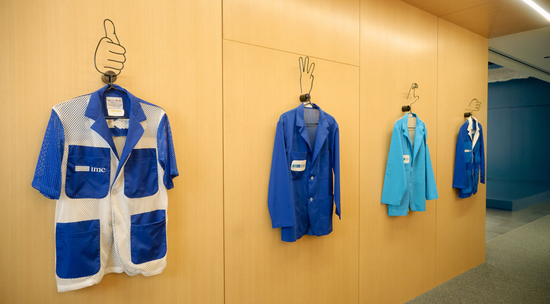




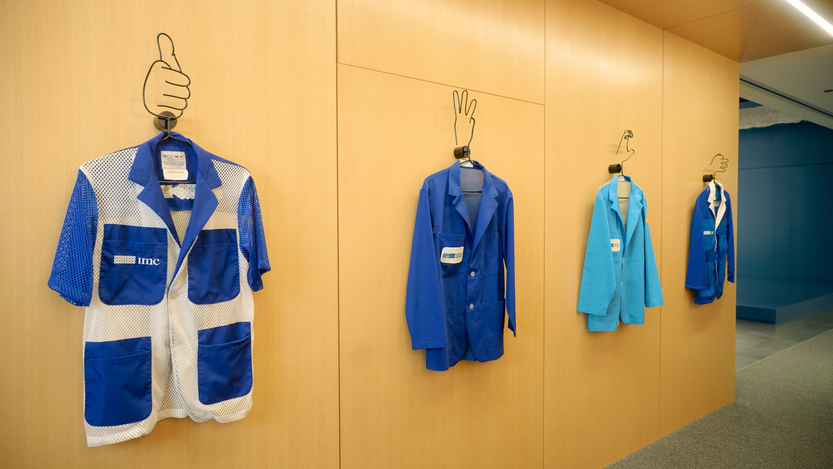


IMC Chicago opened its doors in 2000, becoming our first overseas office. It now hosts more than 800 employees, making it the largest IMC location. Home to the Chicago Mercantile Exchange (CME) and the Chicago Board Options Exchange (CBOE), the city is at the centre of the global market.
Similar Jobs at IMC Trading
.png)
Fintech • Machine Learning • Software • Financial Services
Performance Engineer Interns conduct quantitative research on exchange and network technologies, design optimization strategies for electronic trading, develop AI agents, ETL pipelines, and Python algorithms, and reverse-engineer and stress-test low-latency systems. They collaborate with traders and hardware and software engineers to improve liquidity-taking, quoting, and ultra-low-latency trading strategies.
Top Skills:
Etl PipelinesMachine LearningNetwork ProgrammingPythonStatistical ModelingSystems Programming
Fintech • Machine Learning • Software • Financial Services
Conduct quantitative research on exchange technology and large datasets, design strategies for ultra-low-latency trading, and develop AI agents, ETL pipelines, and Python algorithms. Reverse-engineer and stress-test network and systems technologies, collaborating with traders and hardware and software engineers to optimize liquidity-taking and quoting strategies.
Top Skills:
Artificial IntelligenceETLMachine LearningNetwork TechnologyPythonQuantitative ResearchStatistical ModelingSystems Programming
Fintech • Machine Learning • Software • Financial Services
Join the IMC talent community to receive updates about internships and fellowships tailored for PhD students. Stay connected for opportunities.
What you need to know about the Chicago Tech Scene
With vibrant neighborhoods, great food and more affordable housing than either coast, Chicago might be the most liveable major tech hub. It is the birthplace of modern commodities and futures trading, a national hub for logistics and commerce, and home to the American Medical Association and the American Bar Association. This diverse blend of industry influences has helped Chicago emerge as a major player in verticals like fintech, biotechnology, legal tech, e-commerce and logistics technology. It’s also a major hiring center for tech companies on both coasts.
Key Facts About Chicago Tech
- Number of Tech Workers: 245,800; 5.2% of overall workforce (2024 CompTIA survey)
- Major Tech Employers: McDonald’s, John Deere, Boeing, Morningstar
- Key Industries: Artificial intelligence, biotechnology, fintech, software, logistics technology
- Funding Landscape: $2.5 billion in venture capital funding in 2024 (Pitchbook)
- Notable Investors: Pritzker Group Venture Capital, Arch Venture Partners, MATH Venture Partners, Jump Capital, Hyde Park Venture Partners
- Research Centers and Universities: Northwestern University, University of Chicago, University of Illinois Urbana-Champaign, Illinois Institute of Technology, Argonne National Laboratory, Fermi National Accelerator Laboratory
